Thursday, March 26, 2009

Weighted RPS

Weighted Rock/Paper/Scissors is the sort of mechanic Dave Sirlin loves, and that I've been thinking about using in an RPG since reading his Yomi concept years ago.

Essentially a trumping circle like RPS becomes interesting when you have a stronger incentive to use one move over another.  If we play RPS for money, and I get $15 if I win with rock, $10 if I win with paper, and $5 if I win with scissors, there's instant depth.  You know that I want to win with rock, so paper seems like a good strategy.  But I know that, so throwing scissors for a lesser win is improved, which in turn you know etc etc.  

Time has repeatedly proved I'm too lazy to actually write an RPG, however.  So I'll describe what it might look like:


You play one character, who has three scores for conflict, rated at 3, 6 and 9, in an RPS relationship.  Let's say Finesse beats Power which beats Subterfuge which beats Finesse.

You have a number of hit points (let's say 20), when you've lost them all you can't contributed to the conflict anymore.

Your team has HP for the conflict (just like Disposition in Burning X), which is by default half the team's total HP (so 40 for a four player group).  When it's all gone, you've lost the conflict, you don't get what you wanted, and the enemy does.  You can bid up the difficulty of the conflict by spending conflict HP, which allows you to get more for winning (eg "We hate these guys, we want them out of the game for good, we're spending 20 HP to kill them all and destroy their empire if we win").

The conflict is turn based, each character (PC and NPC) in turn picks an opponent to contest with.  You choose Finesse, Power or Subterfuge simultaneously, with a draw retested, but you DO know your opponent's rating in each before choosing.  If you win, your opponent loses both personal and conflict (team) HP equal to your rating.   If they win, you lose according to their rating - no safe attacks!

(OMG you don't have to kill everyone to win the conflict!)

Wrinkles are:

- It's level based, and higher levels get you abilities to use to modify attacks.  These have a cooldown (by default one turn, probably they are cards and you tap them).  If they modify ratings they must be used BEFORE throwing RPS (and no character can ever have two equal ratings from any combination of effects).  You will probably see things like "+3 Finesse for this attack", "Use when you have won an attack, do +3 conflict damage but no personal damage", "If you win, lock your opponent's two rightmost abilities for two turns".

Ideally characters should know more abilities than they can actually use, allowing a big PC problem space to master, but NPCs to be competitive with a minimal working set (amongst other benefits).

-  There will be an Exalted-style stunt mechanic, possibly giving personal HP, untaps.

-  There really should be mechanical conditions on the battlefield relevant to the objectives, which can be neutralised or flipped by character action.  Hopefully making things feel less abstract without unnecessary detail (eg "You're fighting inside the senate chamber!  Whoever currently has the favour of the senators does an extra point of conflict damage on a successful attack.  Your foes start with their favour.")  That implies a quick resolution system that's probably needed anyway but doesn't fit :(


The way I'd probably do it is seperate combat and non-combat conflicts, with each character having different ratings for both (but equal...9/6/3 in each field).  Certain powers would allow crossover between realms of conflict.

It certainly needs work, and probably mecha.  I'm not sure if I'll maintain enough interest to apply either...

Monday, March 23, 2009

Anything can be theorycrafted

The Elitist Jerks benefactor's forum has a venerable but lively style thread, where a sartorial master holds court. Crumpled gamer nerds are honed into competent dressers. The hottest sales are heralded with all the import of class nerfs and buffs.

Raiders care about quality. The overlap of budgets and sales is sufficiently random to leverage the same skills that maximise DPS from random loot tables. Naturally they eat it up; even I feel compelled to shop for shoes. Pity I don't have trivial access to Manhattan >_<

Thursday, March 5, 2009

Learning to Fight

I am climbing the viciously steep wall between my abysmal execution skills and actually getting to play Street Fighter IV.

Most games I play are very easy - in particular rpgs, where skilled or knowledgeable play actively makes the game easier by giving you a more powerful playing piece. Other games have poor incentives to do things the hard way, and I've never found making my own arbitrary challenges compelling. I don't really PVP.

Hence, my skills are flabby.

SFIV is a compelling case for trying to fix that - the learning curve starts out fairly brutal, but it's long - all that improvement goes somewhere, it has utility. It's a very pure form of PVP with a huge and vibrant community. Their jargon has the seductive note of depth, their champions are awe-inspiring (Daigo "The Beast" Umehara's epic parry comeback belongs amongst the great competitive sporting moments). Becoming mediocre at this game is a worthy goal, and has a lot of gaming cultural currency :)

So while I wait for my Hori stick to arrive, dreaming of playing Rose or Sakura with finesse online, I throw Ryu's fireballs at the lowest breed of AIs, hoping to hit seven in ten. And when I fire up a PSP or DS game, I reach for the hardest difficulty, hoping to shed a little flab.

Sunday, March 1, 2009

Less is More

Amusingly enough, the more successful I am in WoW (via my guild), the less time I need to put in.

In tBC, as part of a very casual guild, I felt like I needed to work constantly to maintain my raiding edge, farming heroics for badges, having stockpiles of gold in case raid drop crafting recipes hit the AH.

In WotLK, I'm part of a medium-core raiding guild, and I don't really feel I need to play at all outside raids. My gold stockpile from levelling alts isn't depleted, a little AH and rep action is good enough to get alts into Naxxramas, and once you're in there with a competent raid the gear flows freely. My paladin alt has done maybe three or four heroics, but can MT Naxx-10 and competently OT Naxx-25.

Ulduar will be more difficult, but the ramp in will still be highly accessible raiding, more so as we crush Naxx with our ilevel 226+ geared mains for the benefit of alts. Eventually I'll be obliged to make some more money, but even with flask and repair costs relatively little effort translates into a LOT of raiding these days. I can keep my shaman at the top of her game while staying current with console gaming, and it's very nice indeed :)

Monday, February 16, 2009

Orange x4

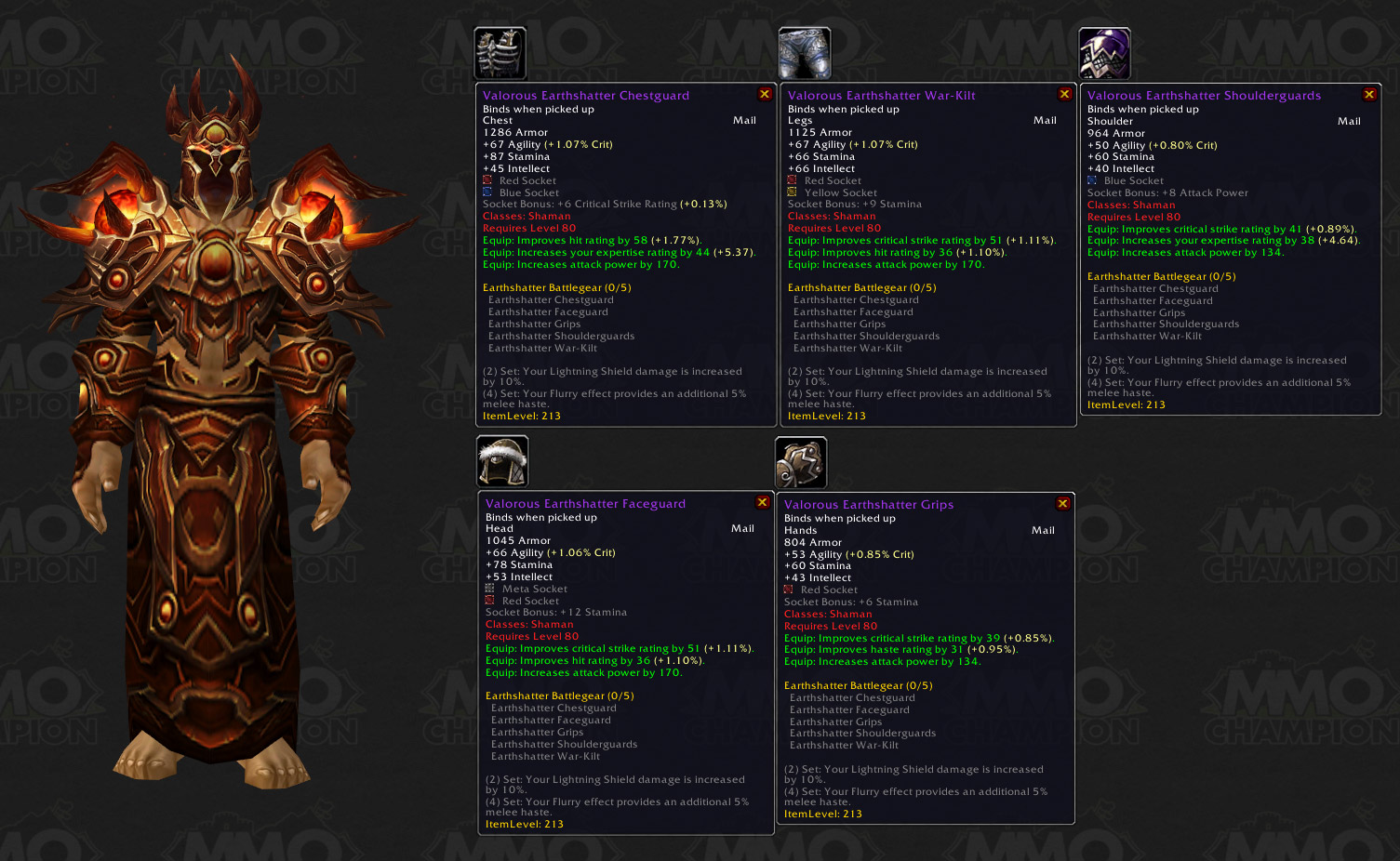
Mengtzu replaced the last of her pretty blue armour with ugly but more powerful orange gear, bringing to an end the age of the really ugly blue/orange hybrid look. Now we just need to kick Kel'thuzad and Malygos until they cough up everything I want :)

Sunday, February 15, 2009

Of course Batwoman is gay

Renee Montoya is a great (and I think popular?) character who is not only gay, but whose sexuality has been used to great narrative effect (Half a Life). Now she's a fairly prominent superhero as the Question, but doesn't have a soap opera space befitting her stature.

Therefore, more gay women will pop up in the DC universe, which is good and healthy (particularly for Renee). It's obviously not the only reason for Kate Kane, but it's a natural fit, and in Rucka's hands seems pretty cool.

(I am a very infrequent comics fan, but I pay attention to Rucka and Morrison every six months or so ^_^)

Wednesday, February 11, 2009

DnD4: Rewarding players without XP

Last night my D&D players had quite the triumph - they flat-out defeated a large number of monsters in an encounter I'd designed to be a chase.

This was partly because the events of the story took a slightly unexpected turn, and the encounter happened on a platform jutting out over a long drop, rather than the corridor I'd originally planned. The players capitalised and pitched most of the non-minion mobs over the edge in short order.

I don't want to change the XP award for the encounter (which was a standard level 6 encounter, not inflated for the large number of mobs); they ended up taking about the same number of turns and expended the same amount of resources as they would have by escaping. It doesn't feel like they've got any further ahead on the learning curve than I would have expected.

But they did do something cool, and they deserve some bennies for it. Here's what I'm thinking of going with, which essentially describes how I like to reward players above and beyond giving them XP:

1. Early access to magic item loot. I wouldn't want to give out extra items (affecting long term balance), but getting an item earlier greatly impacts the short term, and means a little bit more total value from the item over its lifespan. I'll shift up a treasure parcel or two; it makes sense, they held ground I expected them to abandon, so they can have leisure to find some stuff there. In a D&D context getting gold early is unlikely to be as useful, it doesn't have much application until downtime.

2. Information/Plot. Increase the fiction-layer power of the PCs without increasing their mechanical power <3. This already came into play in this case - they held their ground, and thus could interrogate a dying foe. A related reward would be to give the party even more of what they wanted out of a conflict - increase the setting impact of their victory.

3. Improved NPC reactions. In this case, all their future opponents for this adventure will be further down the cavern, and thus probably saw kobolds hurtling down to their doom. Should be good for intimidation purposes :) Giving extra spotlight time to particular characters is also a good reward of this type, but it's not really possible to give extra time to the whole party, so we'll have the NPCs be even more impressed.

Monday, February 9, 2009

Rewriting Exalted

If you've ever been a serious Exalted fan, you've probably been gripped at some point with an urgent desire to rewrite the system. Relax, it's perfectly normal, happens to everyone ;)

Right now here's some ideas on how I'd do it. I won't, because I'm not insane, but I'm willing to waste some time thinking about it. Most of this involves ripping off D&D4, Guild Wars, Burning* etc

1. Classes and levels (kinda). Progression needs to be more structured than in the current game, so that everyone has at least a vague idea of what characters can do after a certain amount of play. D&D is the master of this, but you wouldn't need to go quite that far. "Class" could be built into charm trees, a finer-grained Essence scale could gate access to effects until the group crossed certain thresholds of play.

2. Forced multi-discipline competence (multiclass!). You have to be good at combat, and you have to be good at some significant non-combat thing. Exalted are anti-Primordial kung fu weapons and rulers of the mortal world, so it can be made to fit in setting while solving a bunch of balance and spotlight headaches. Since you get exactly two things to be really good at, you also can't screw yourself over by spreading yourself too thin.

3. You can only use a subset of your powers at any given time. Like memorised spells in D&D, or your 8 skills in Guild Wars, you might only have 6 or so charms accessible during an encounter, even if you know 30+. This puts a cap on synergy craziness, and allows you to have GMs and players playing by the same rules without the GM needing to care about an NPC's entire library. You might argue that at high skill levels most players do this already anyway by only ever using a couple of combos ^_^

4. Conflict resolution. Bake in the idea that success or failure doesn't involve killing everyone on the opposing side. Objectives, stakes, whatever. This shouldn't be too abstract (current Exalted gets around abstraction wherever it can, which is neat in its own way), but Invincible Sword Princess in combat makes more sense if you can beat her without killing her (which you CAN'T, she's INVINCIBLE, that's the POINT ^_^).

5. Speaking of which, we now have baseline competence for characters, a fair idea of what they're capable of at given points of progression, and a system for challenging them without killing them. Time for some great encounter design. Put in an encounter design system, preferably with player input on the fly (it's in-genre for powerful characters to bid up their troubles through hubris ^_^), and then stuff the book with examples. Your first Exalted GMing experience tends to suck because you put the players up against inappropriate opposition (even more fun when it's a moving target because inexpert players will probably spit out randomly capable PCs). That should be fixable.

6. Start new players at a sensible point on the learning curve. More experienced groups can skip past it, but teach the newbies one thing at a time.

Sunday, February 8, 2009

DnD4: Fun with state awareness

By giving XP on an encounter basis (including skill challenges), D&D4 has a fair idea of how much actual play you've done.  Combined with a sensible doling out of new abilities per level, it forms a fairly graceful learning curve.  

With a class/level system, a vague expectation of how expert a player of a given level is and how much loot they have, D&D4 can present the DM with defaults to build encounters around.  It's aware of the PCs in a way that a point-buy system like Exalted can't match.  The DM's judgement is still there, but they have a good base state that they can improvise from in a more informed fashion.

This is old, hoary stuff, but D&D4 does it very cleanly.  There's a couple of things I'd like to see though:

- A more formal means for the PCs to ante up and go for a harder encounter for more XP.  There is a feedback mechanism in place - expert players can take on harder encounters, level faster, and progress more quickly through the learning curve of new abilities.  However there's nothing in the system that explicitly lets them bid up (or down, for less expert players) - obviously many groups can handle it easily at the table, but I think a hardcoded approach would be neat.

- A better awareness of rest.  Encounter difficulty usually scales with how long it's been since the PCs have taken a long rest; in my opinion, more significantly than Action Points can offset.  The decision on whether to rest is thus strictly story based - you should do it unless the fiction prevents it.  In Agon, the PCs can rest at any time, but doing so increases the GM's budget for creating adversity, creating a clear incentive for pushing through where possible.  Increasing encounter budgets in D&D4 may not be appropriate, but I feel it'd be more fun if the decision to rest was similarly strategic.

Saturday, February 7, 2009

Neat Mouse Guard incentives

Mouse Guard is streamlined enough that the incentives underlying Luke Crane's Burning* system become suddenly obvious.  You start getting the idea that for a practiced group, these games would be a ton of fun.

For example, you can activate your traits to help yourself, or help your opponent.  If you help your opponent, you earn a resource to be used later to pursue your own goals or recover from damage.  There's two neat use cases for buffing an enemy that I really like:

1.  You're getting crushed anyway, so you make it *worse*

2.  You're going to win handily, so you give the foe a better shot

Little bit more strategy, little bit more drama.  That's a microcosm of the sort of synergy I think Luke tries to create in the play of his games.

Thursday, February 5, 2009

Shoulders!

Through the reliable mercy of badges, I've finally got Tier 7.5 shoulders for my Enhancement shaman, Mengtzu. The blues I've been wearing for months are gone to the oblivion of the vendor, along with the feeling that my gear, while skillfully chosen, was impoverished.

The enormous shoulderpads of WoW raiders may appear absurd at first glance, but I find them a remarkably compelling signifier of character power and guild achievement. Easy recogniseable from a distance, even in a crowd, they inevitably colour my first judgement more than any other piece of gear. I'll usually notice them before the stupid name or the absurd haircut, and learn a useful piece of information (even if that is "attended four raids and rememberd to pick up their badges" right now ;)

This makes me suspicious of cosmetic gear schemes, where the appearance of one piece of gear is laid on the stats of another. I want to see gear that tells a tale of what the character has done, not the player's sense of style.